
MARC
The online shop of a car lover.
Date: 2026
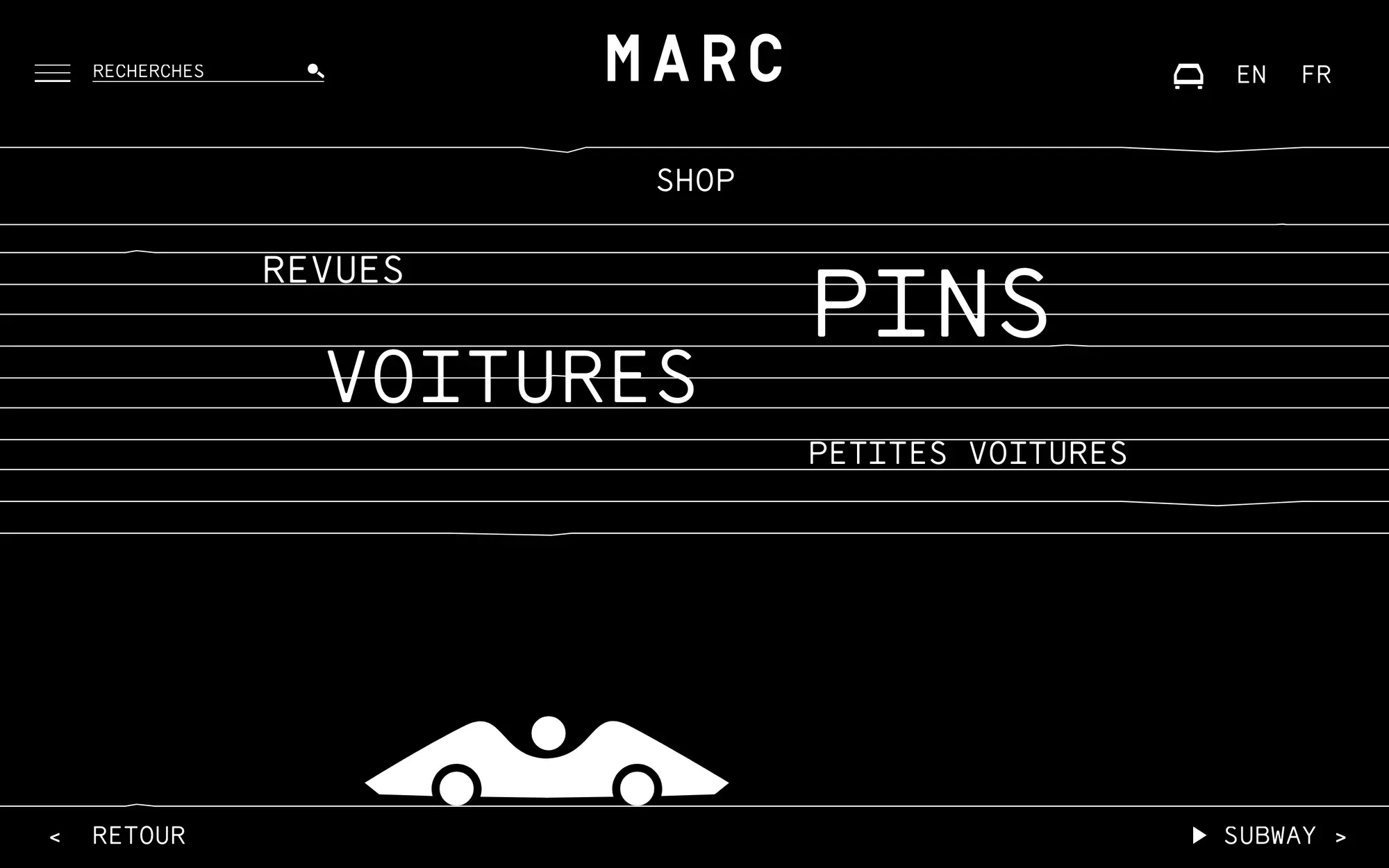
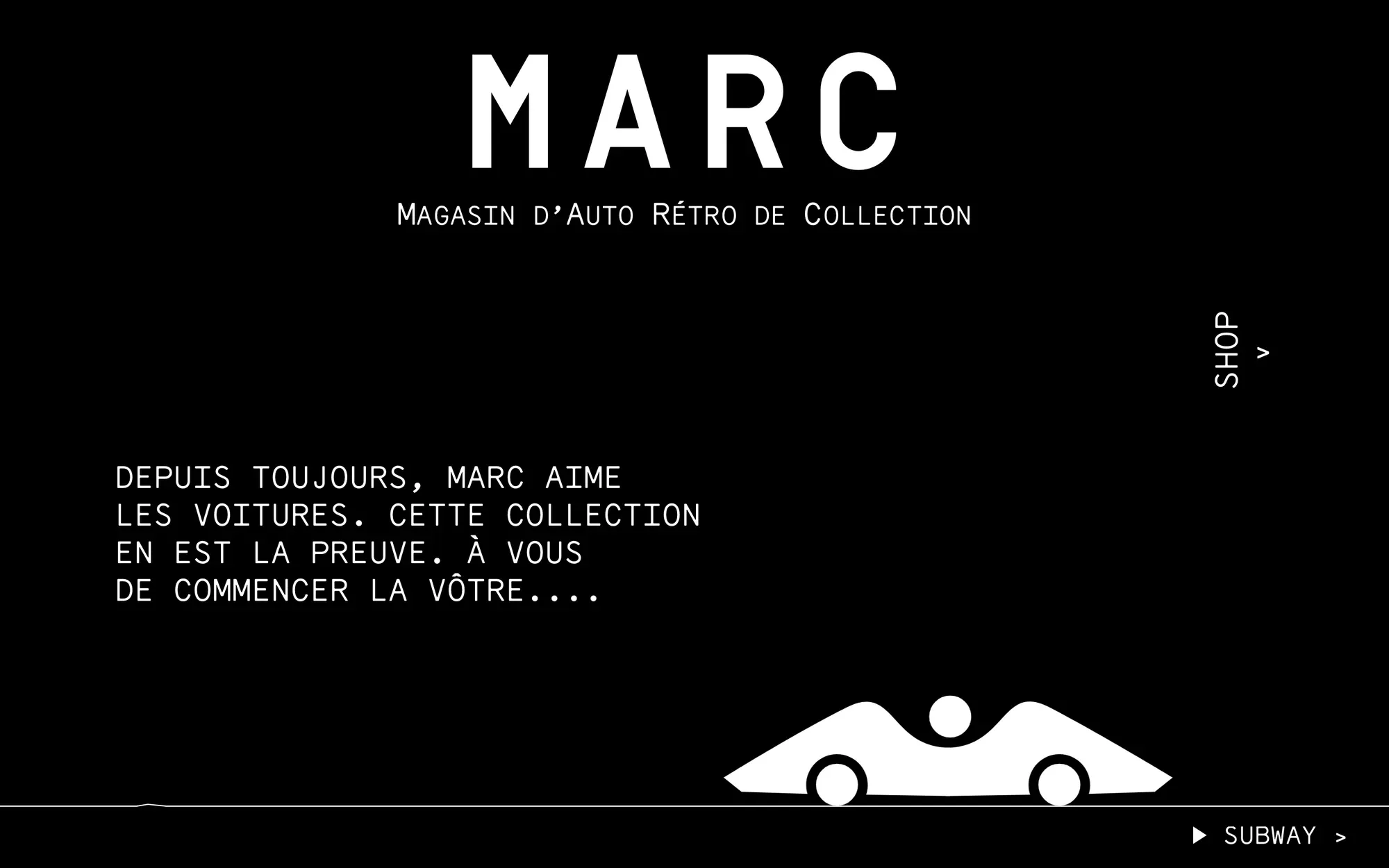
My father-in-law, Marc, loves cars, model cars and pins, and wanted to work in the world he loves. With Julie Marshall, Marc’s daughter, an art director trained at the École Penninghen, we created the online shop: MARC, the “Magasin d’Auto Rétro de Collection” (vintage car collector’s shop), whose letters turn into “Marc A Remis le Contact” (Marc has turned the key again).
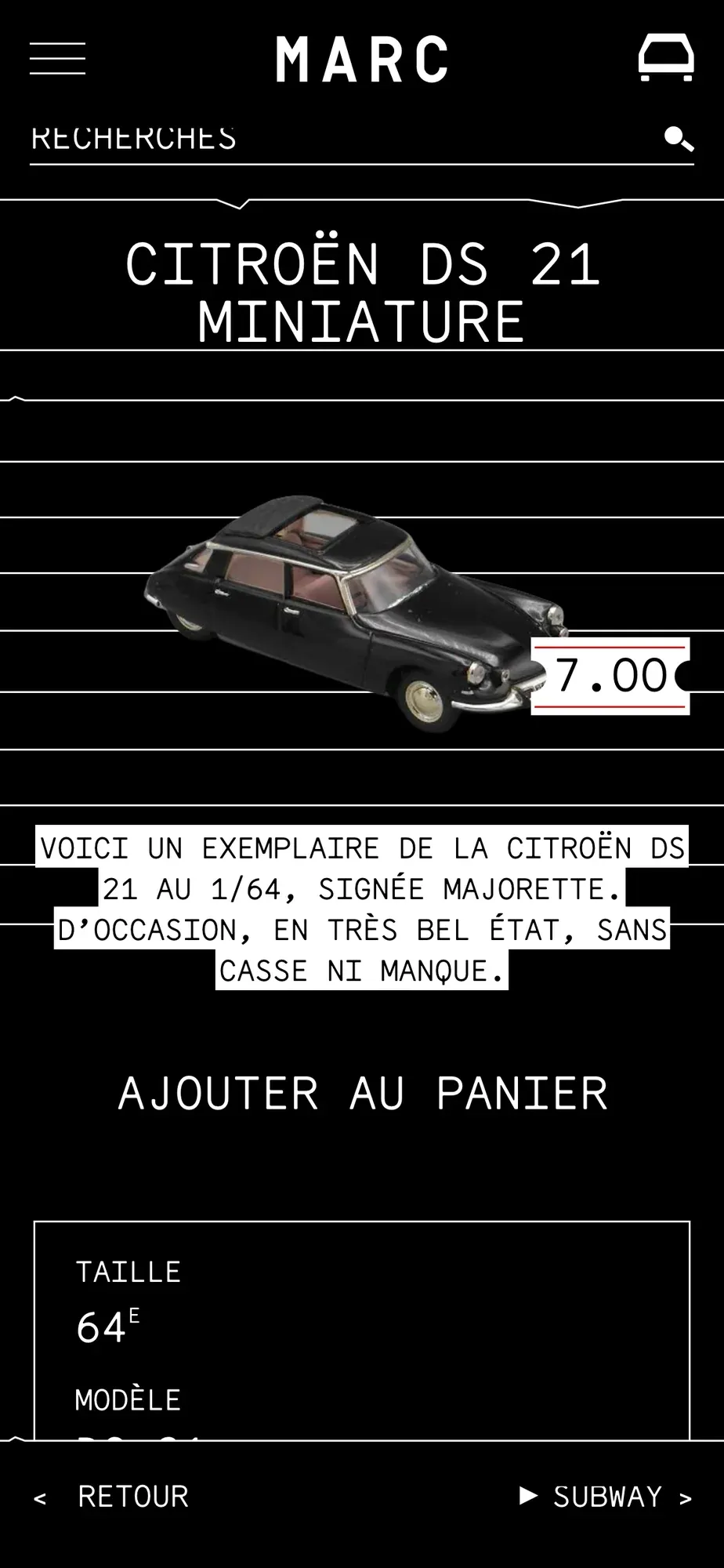
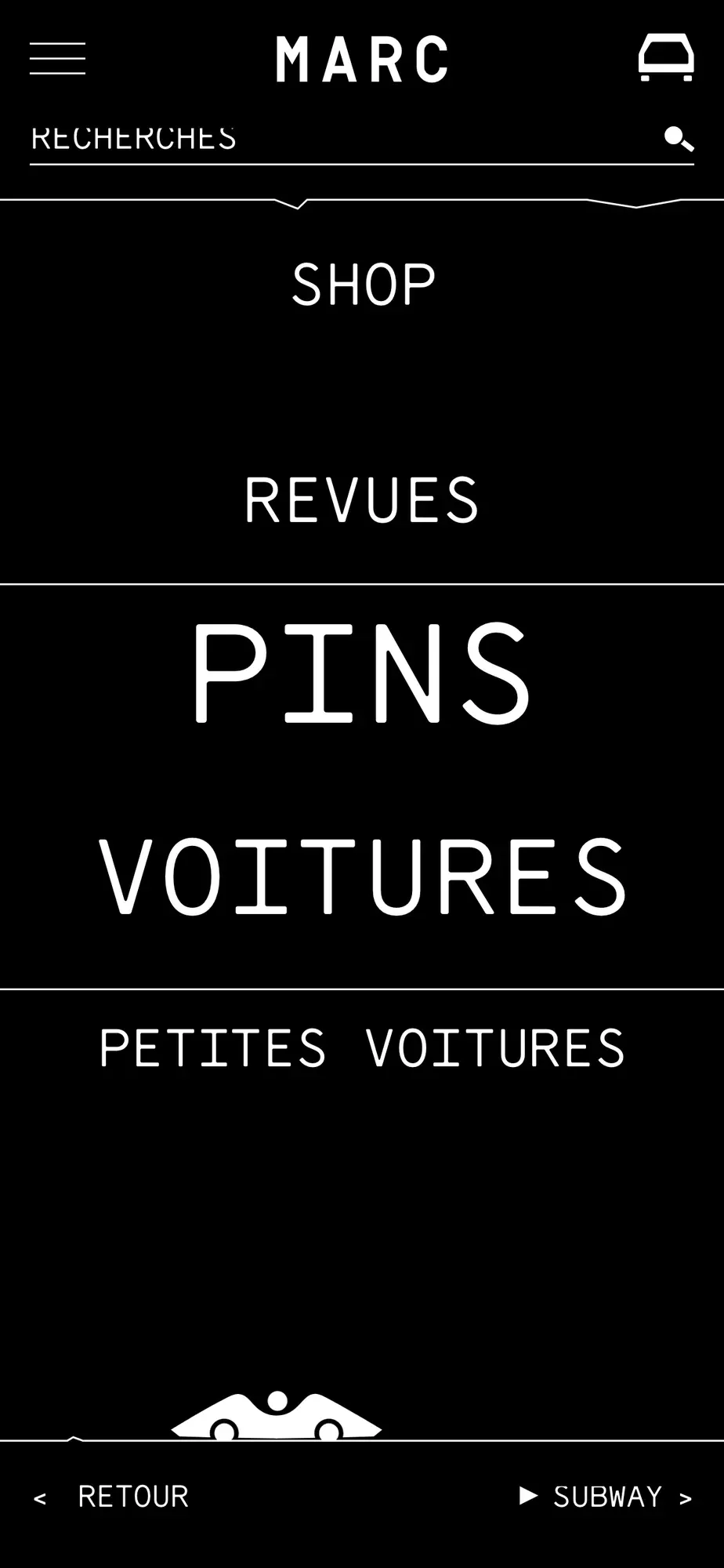
Julie designed the site, and I built it from the artboards, to the point: a site that scrolls horizontally like a road, with a little car that drives along with the visitor. Text appears letter by letter like on an old terminal, prices are fed out like tickets from a till, a fuel gauge shows the amount needed for free delivery, and a radio plays at the bottom of the screen.
I also configured the back office so Marc can easily manage his activity: manage the pieces and photographs, track orders until they ship, and receive call requests for the cars.
The result
What was done
01
Artboards followed to the point
Site that follows the art director’s artboards at the exact scale: every length comes from Julie’s files, on a computer as on a phone, in French and in English.
Next.js · InDesign (IDML) · Python
02
Demanding animations
Road scrolling one screen at a time, car that drives on and changes size with the page, letters blowing away, texts appearing as on a terminal, price fed out as a ticket and magazines moving apart. All work on a computer as on a phone, and disappear for anyone who has turned animations off.
React · View Transitions
03
A shop that makes noise
Car’s horn and keyboard’s clicks made in the browser, with no sound file at all, and radio plays the playlist from one page to the next without stopping.
Web Audio · Spotify
04
Cars sold over the phone
Collector cars don’t go through the basket: a call-back form sends the request to Marc by email and files it in the back office, protected against mass sending.
Resend
05
Flawless payment
Card payment on the shop’s own page, an invoice including VAT for every order, and a check of every payment that catches lost messages: no order is ever lost or counted twice.
Stripe
06
Stock kept to the piece
Pieces are reserved while the customer pays, then sold or put back on the shelf, so nothing that has already gone is ever sold; postage is computed from the parcel’s weight.
Postgres · Drizzle
07
Back office made for Marc
Marc runs the pieces, the orders until they ship and the call requests there. The cut-out photographs are cropped there, set on one canvas and turned to the right: every piece shows at the same size and drives the same way.
Payload CMS · Sharp
08
Easy deployment and upkeep
Every change is checked, deployed and tested online automatically. Database migrations run before the new version takes over: if they fail, the previous one keeps running, and rolling back takes one command. The shop stays closed behind a passcode until it opens.
Fly.io · Supabase · Docker · GitHub Actions
How it works
Scroll: the drawing follows.
01 / 09
Enter MARC
On arrival, the visitor sees the shop’s name, and the words “Magasin d’Auto Rétro de Collection” type themselves underneath, letter by letter, as on an old terminal. Then each letter changes, and the sentence becomes “Marc A Remis le Contact”. Every text on the site types itself this way, to the sound of a keyboard, faster and faster as the visit goes on.
02 / 09
Take the road
The site doesn’t scroll down but to the right, one screen at a time, like a road. MARC’s car drives along with the visitor, smaller when the pieces are, and the letters of the leaving screen blow away in the wind. Click the car, and it honks and turns the headlights on.
03 / 09
Find a car by year
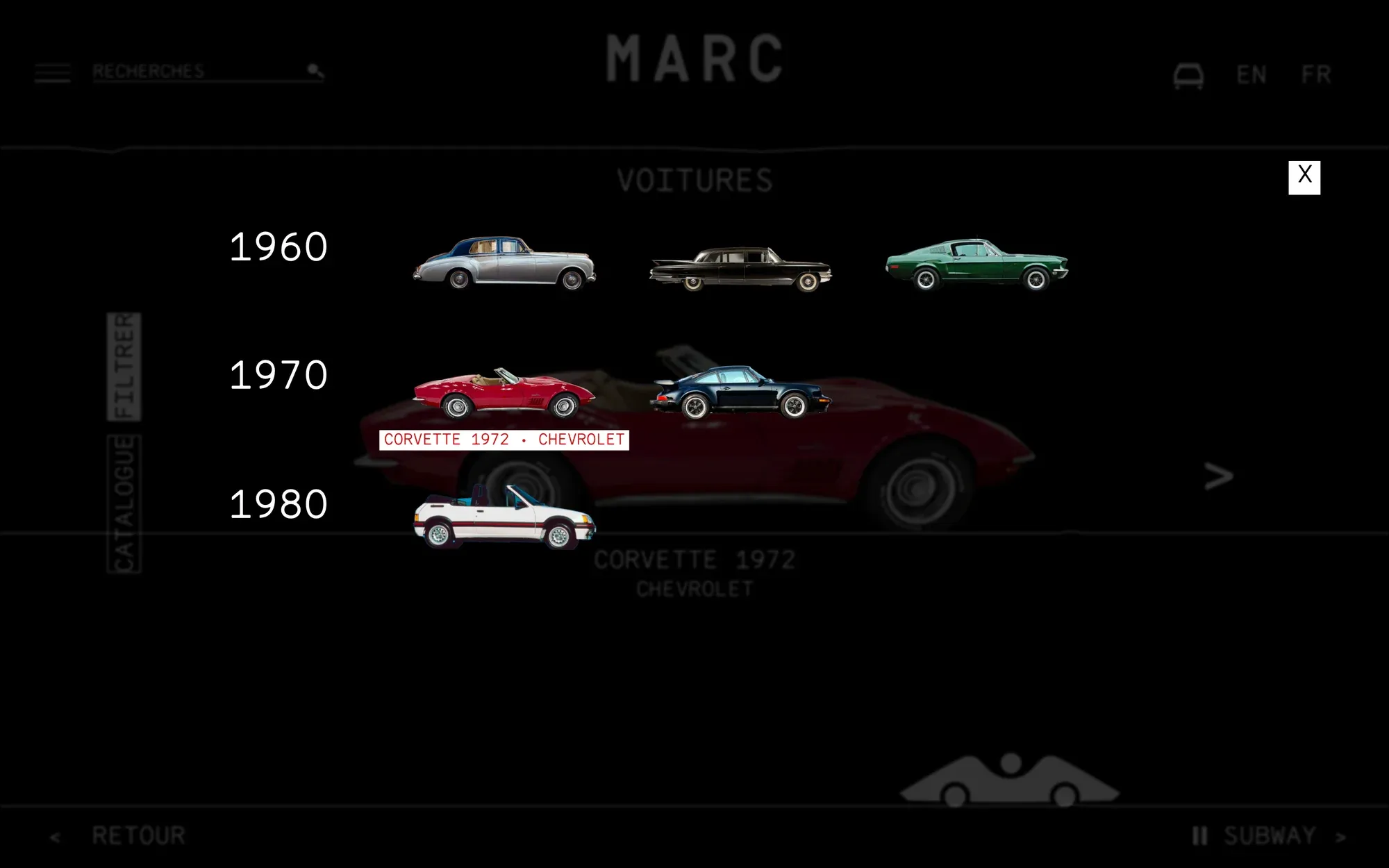
To find a car, the visitor opens the catalogue: the page darkens, every car lines up by decade, and the one they came from lights up. They can also filter the cars by year or by make, and share the filtered page.
04 / 09
Book a call
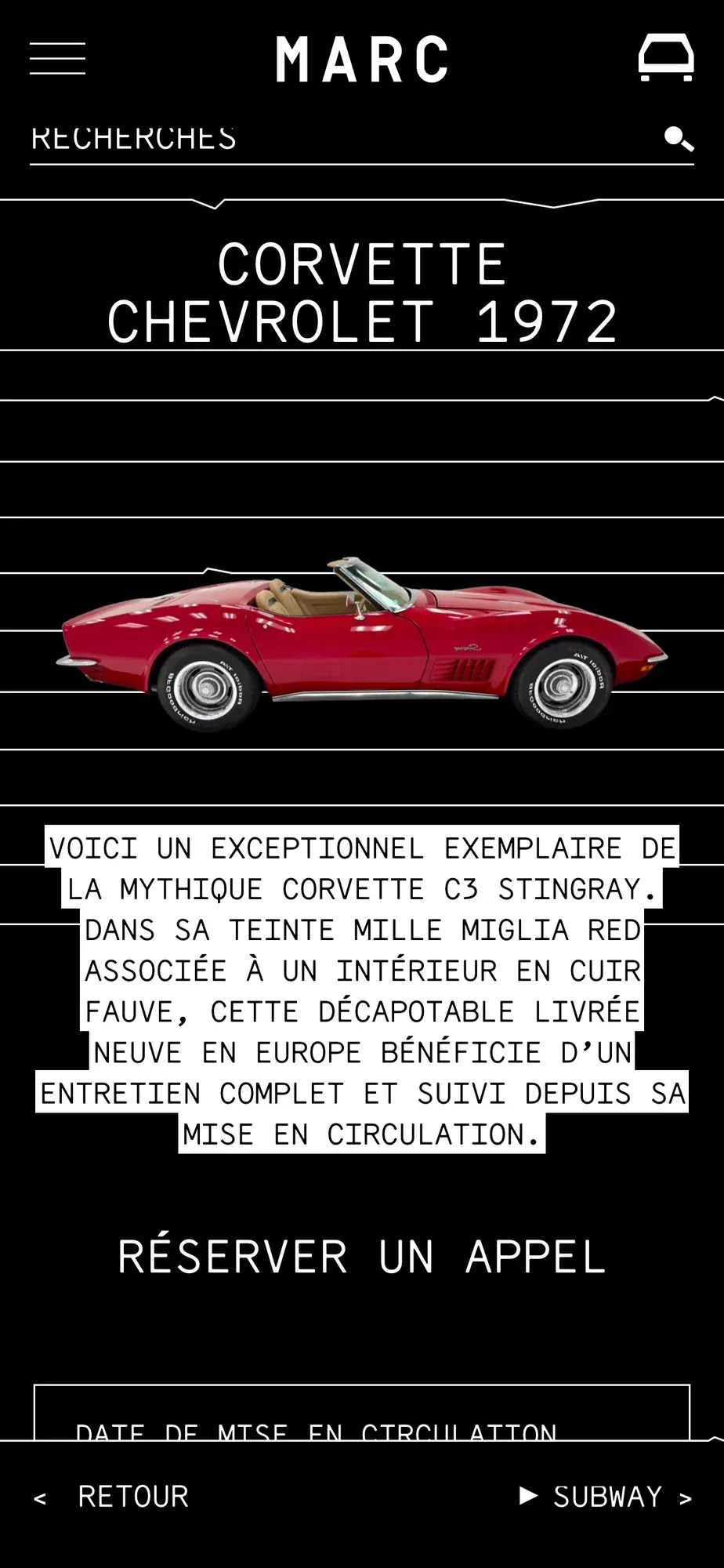
A collector car isn’t bought in one click. The page shows the first registration, the mileage, the gearbox, the options, the service log and the photographs, then offers to book a call: the visitor leaves a name, a telephone number and when to call back, and Marc gets the request by email.
05 / 09
Choose a model car or a pin
Model cars and pins are ordered online. On a piece’s page, the price is fed out like a till receipt, in jolts, then torn off. A piece already in the basket or already sold carries a sticker that indicates this.
06 / 09
Leaf through the magazines
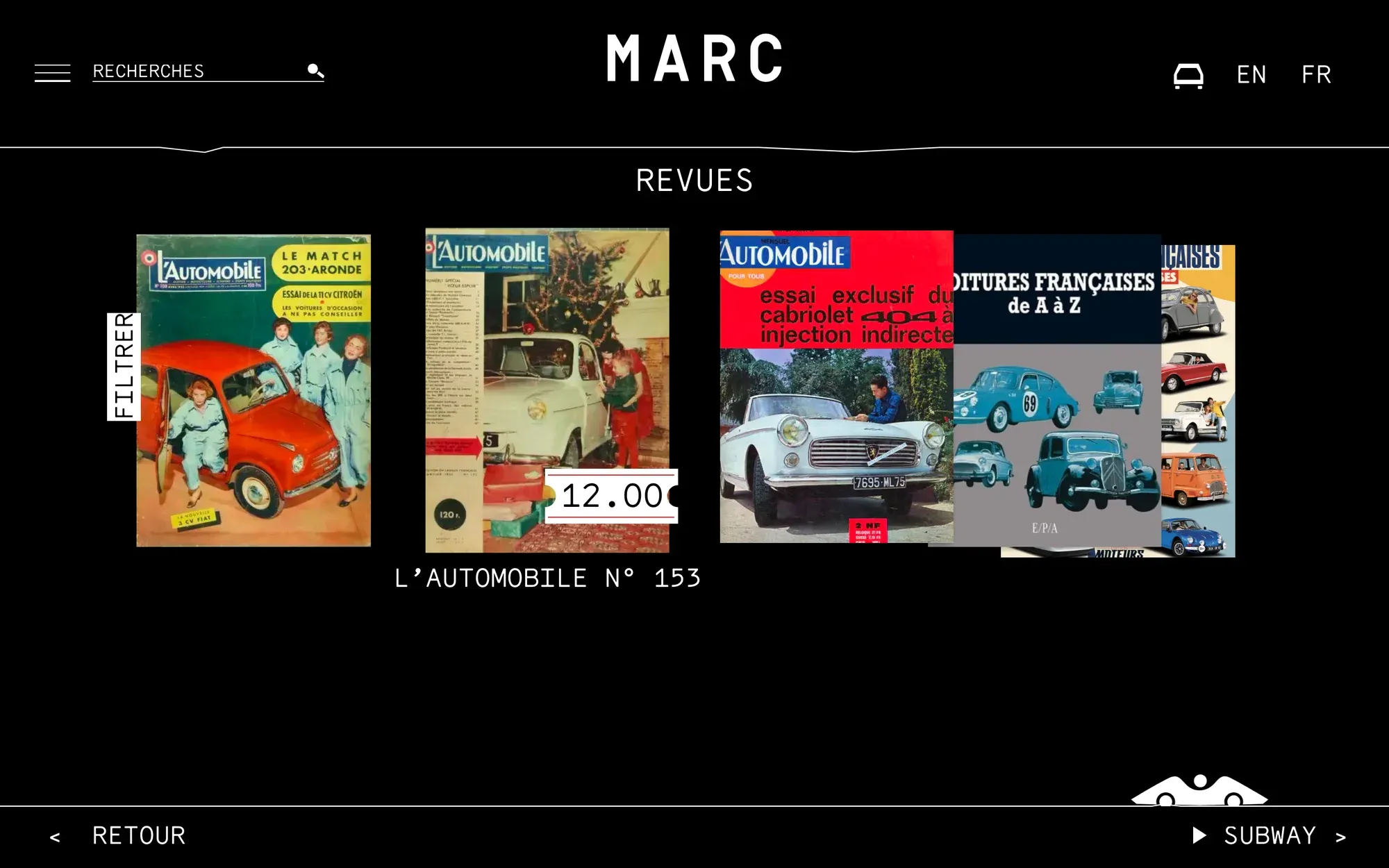
The motoring magazines stand side by side, as on a rack. When the mouse passes over one, the others move apart to let it show, the title appears underneath, and the price is printed on the cover.
07 / 09
Fill the basket and pay
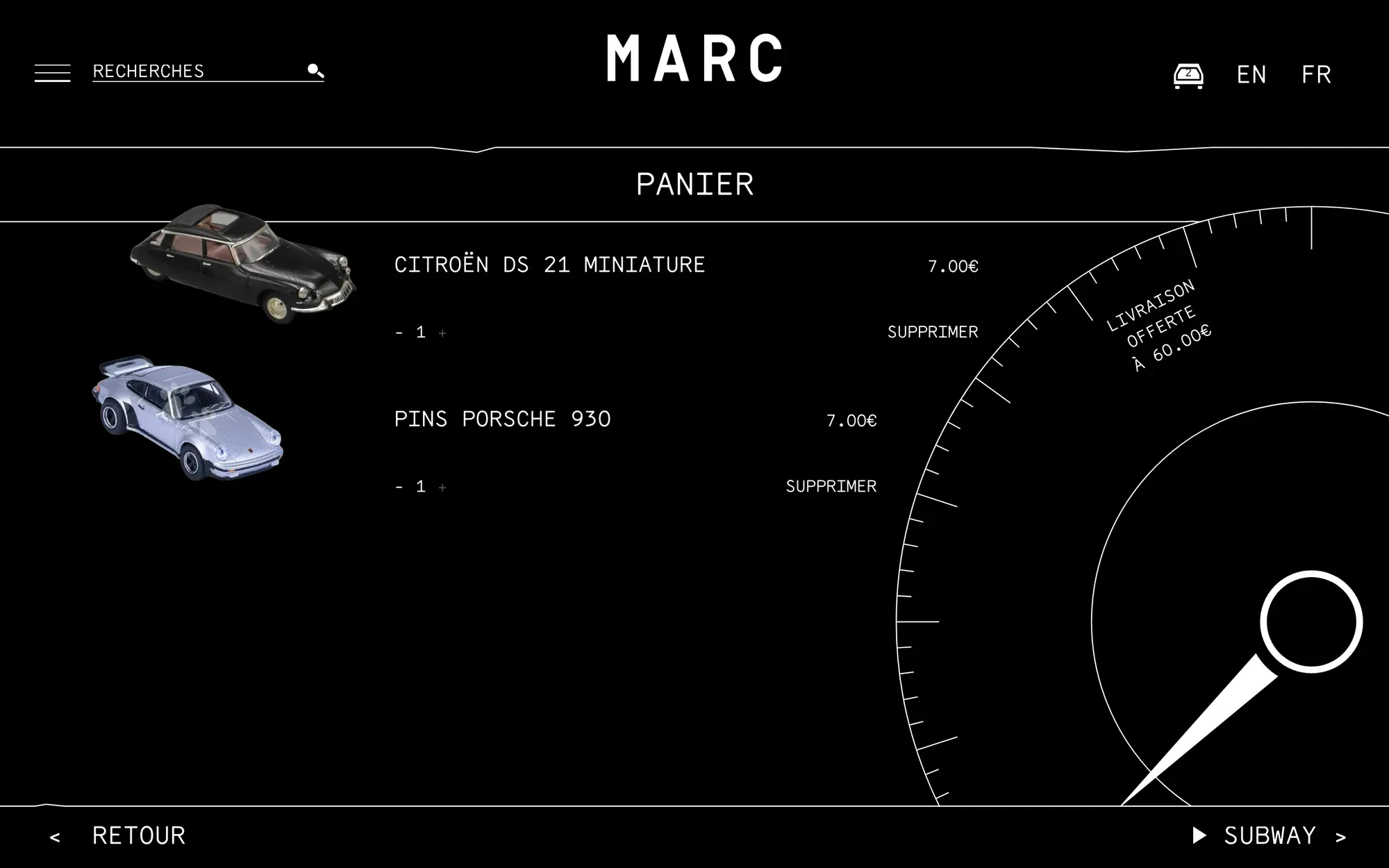
In the basket, a fuel gauge shows what is left to spend for free delivery. The customer pays by card on the shop, and the pieces stay reserved for them while they pay. They get a confirmation, and Marc the list of pieces to pack.
08 / 09
Listen to the radio
At the bottom right of every page, a radio plays a playlist Marc chose, without stopping from one page to the next. The visitor can pause it or skip to the next song, and the title playing opens the song in Spotify.
09 / 09
Put a piece on sale
When Marc adds a piece, he drops the cut-out photograph into the back office. It is cropped and set on a 2,000 × 1,000 pixel canvas, so that every piece shows at the same size, and turned round if it faces left: on MARC, every car drives to the right.
Specifications
- Collection
- Personal products
- Date
- 2026
- Context
- A family project, for my father-in-law, who loves cars, model cars and pins.
- Role
- Design and development
- With
- Julie Marshall (art direction)
- Built with
- Next.js (App Router) · Payload CMS · Postgres · Drizzle · Stripe · Web Audio · Supabase · Fly.io
- Platforms
- Web